

Four Innovative Construction Tools Invented by Women
Four Innovative Construction Tools Invented by Women


Four Innovative Construction Tools
Invented By Women
Women have long had a history in construction. However, their stories are often clouded by the industry’s gender assumptions. While it’s no secret that men take up a large portion of the industry, women play a hand in building homes, schools, and businesses, too. The following women have invented tools that have advanced the industry.
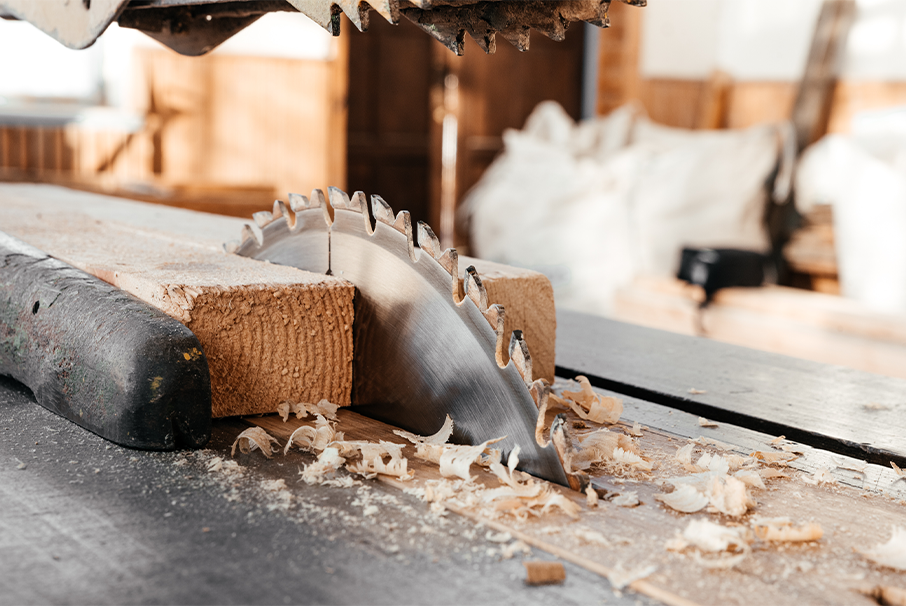
Tabitha Babbitt - Circular Saw
Tabitha Babbitt was born in Hardwick, Massachusetts, in 1779. She belonged to a historic cultural group that was established long before they came to the Americas. The Shakers were a Christian cultural group known for their craftsmanship, which is still around to this day. Among them was Tabitha Babbitt. She was an artisan herself, working as a weaver. One day, she noticed that the men working at her local sawmill were being inefficient in their work. They used a two-man whipsaw that only cut one way, so the movements in between cutting and setting it up to cut again were being wasted. She proposed a circular saw idea. She attached a circular saw to her spinning wheel and created a spinning circular saw where no motion was wasted. It became common practice to opt for the circular saw over the two-man whipsaw. They wrote about her design in the Boston Sunday Globe in 1898, but Tabittha never patented her invention. Shaker customs thought intellectual property should be shared with the collective community and so even though Tabitha isn’t credited as the inventor, the circular saw is widely used today.
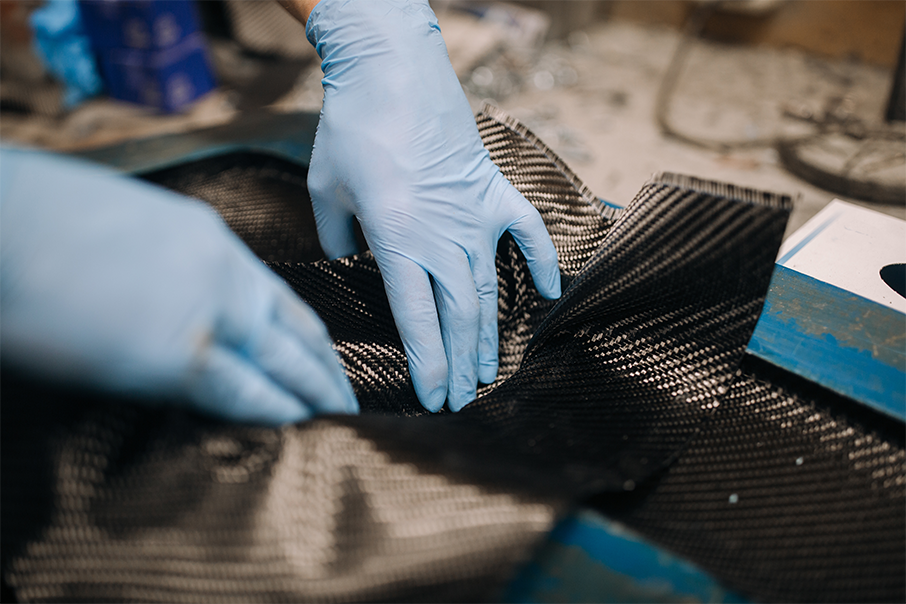
Stephanie Kwolek - Kevlar
Kevlar is famously used in bulletproof vests, and we have Stephanie Kwolek to thank for that. She was born in Pittsburgh, Pennsylvania, in 1923, growing up in the suburbs of New Kensington when she developed a love for science and the natural world. Her father fostered her love for nature, and her mother her love for fashion. Come college time, Kwolek decided to pursue a career in the medical field. She went to Carnegie Mellon University and studied chemistry. Her plan was to save up for medical school, so she got a job at DuPont as a chemist. She interviewed with her soon-to-be mentor and offered a job on the spot when she called in to inquire about an earlier decision date for her position. Kwolek started working with polymers and was so captivated by chemistry that she ditched her plans to go to medical school and made chemistry her career. In 1959, she won a publication award for producing nylon in a beaker at room temperature, and it is now a common classroom experiment. Her most notable work, though, was her discovery of aromatic polyamides that, when treated with heat, would form a liquid crystalline solution that could be spun into light, tough, tensile, yellow fibers. They are now used in all sorts of products, including clothes, ropes, helmets, tennis rackets, and more.

Patricia Billings - Geobond
Patricia Billings began her career as a medical technologist, studying fungal and bacterial diseases at Kansas City Junior College. She would also go on to work as a tuberculosis researcher at the Kansas City Hospital. Her true passions lay in the arts, though. Billings studied art at Amarillo College, where she worked on sculptures made of plaster of Paris, a quick-setting plaster commonly used among artists. She would spend hours, weeks, to months creating a sculpture, and one day, one of her lengthy projects fell and shattered. It was then that she decided to take a page out of the Rennaisance artists’s books and strengthen her plaster. This is when she came up with Geobond, an indestructible plaster and the first real alternative to asbestos. Billings had discovered a plaster that was strong, non-carcinogenic, and fire-resistant. The Kansas City government and the Air Force found that not even a 6,500˚ F rocket engine could make it burn. Today, Geobond is widely used in construction for its durability and fire resistance.

Emily Warren Roebling - Concrete Reinforcement Systems
Many don’t know that a woman had a hand in building the renowned Brooklyn Bridge. The project had originally gone to John Agustus Roebling, who passed away after having developed tetanus due to a foot injury. The job went to Washington Roebling, his son and right-hand man. In 1865, he married Emily Warren. Throughout his work with the Brooklyn Bridge, Emily stood by his side, and when he suffered an attack from caisson’s disease that left him partially paralyzed, he relied on his wife to help continue directing the construction. She would meet with contractors, review construction plans, and even give her input and find solutions to pressing issues. Her most notable contribution was the use of concrete as reinforcement for the bridge. The use of concrete reinforcement in the Brooklyn Bridge helped advance its use and became a cornerstone in bridge construction.
Without the inventions of these women, the construction industry would not be where it is today. Women have played an important role in building the construction industry and getting it to where it is today. That’s why we celebrate these women this Women’s History Month.