

Cable Grommets vs. Cable Sleeves: Which Works Best?
Cable Grommets vs. Cable Sleeves: Which Works Best?

Cable Grommets vs. Cable Sleeves:
Which Works Best?
Effective cable management is essential in professional workspaces. Two primary solutions dominate the cable management landscape: cable grommets and cable sleeves. Each serves distinct purposes and offers unique advantages depending on your project requirements. Find which works best between cable grommets and sleeves to select the most effective solution for your needs.
What Are Cable Grommets?
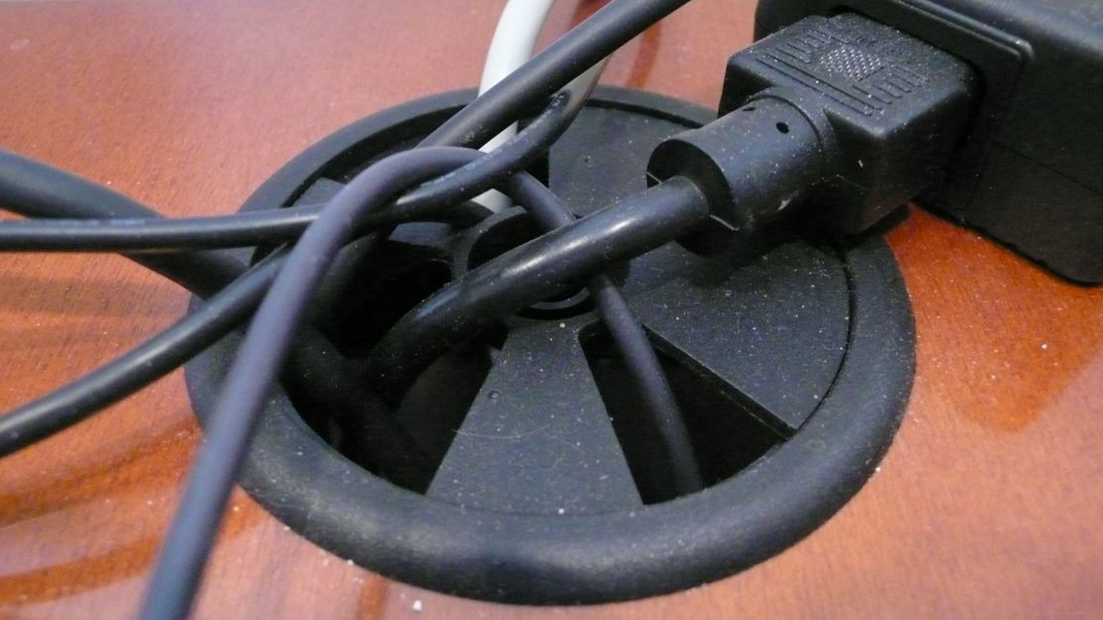
Cable grommets are circular or oval-shaped hardware that creates clean, professional cable pass-through points in desks, walls, panels, and other surfaces. Most cable grommets contain durable materials, including high-grade plastics, rubber, or metal alloys.
The outer housing typically matches common furniture finishes—black, white, chrome, or brushed metal—ensuring seamless integration with existing design elements. The inner sealing mechanism uses flexible rubber or silicone that adapts to various cable diameters while maintaining a clean appearance.
What Are Cable Sleeves?
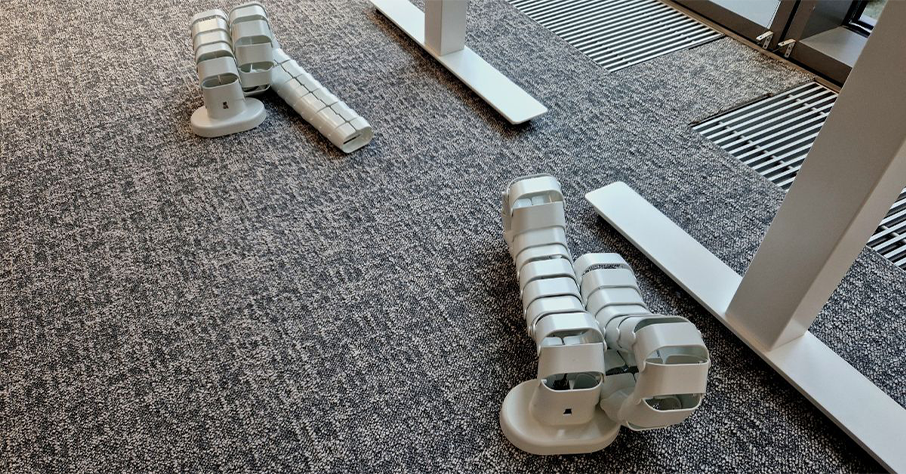
Cable sleeves are flexible tubular solutions that bundle, organize, and protect multiple cables along their entire length. Unlike grommets that manage single transition points, sleeves provide continuous coverage and organization for cable runs. Cable sleeves come in numerous configurations:
• Braided sleeves have expandable mesh construction that accommodates varying cable bundles while providing excellent ventilation.
• Zippered sleeves have full-length openings for easy cable addition or removal without disconnecting existing connections.
• Spiral sleeves wrap around cable bundles, allowing individual cables to branch out at any point along the run.
Materials include lightweight nylon and polyester, heavy-duty PVC, and flame-retardant compounds. The ideal material for your setup depends on application requirements and environmental conditions.

Key Differences Between Cable Grommets and Cable Sleeves
These cable management solutions are reliable in numerous settings, and understanding their unique factors can inform your decision-making. Finding which works best between cable grommets and sleeves lies in their fundamental distinctions in operational scope and installation approaches.
Cable grommets function as stationary pass-through solutions, creating defined entry and exit points for cables. They require permanent mounting on surfaces and work best when cable routes remain consistent over time.
Cable sleeves are dynamic bundling systems that accommodate changing cable configurations. They attach directly to cables rather than surfaces, providing flexibility for installations that may require frequent modifications or adjustments. Design-wise, grommets offer more refined aesthetics for visible installations, while sleeves excel at managing large cable quantities behind the scenes or in technical environments where functionality takes precedence.
Benefits of Cable Grommets
Cable grommets deliver exceptional value in permanent installations where professional appearance matters most. Their rigid construction provides superior protection against cable abrasion at critical transition points, extending cable life in busy environments.
Well-designed grommets create clean, finished appearances that elevate project quality. They eliminate unsightly cable holes and provide consistent visual elements across multiple workstations or installations.
Grommets are ideal for custom furniture and architectural applications. Once installed, they maintain consistent positioning and appearance, regardless of cable changes. Their sealing properties also provide dust and debris protection, which is particularly valuable in clean environments or areas where maintaining interior/exterior barriers is important.
Benefits of Cable Sleeves
Cable sleeves shine in applications requiring maximum flexibility and adaptability. Their ability to accommodate multiple cables of varying sizes within a single sleeve simplifies complex installations while reducing material costs.
The dynamic nature of sleeve installations allows for easy system modifications. Adding new cables or reconfiguring existing runs requires minimal disruption to established systems, making them particularly valuable in evolving technical environments.
From a maintenance perspective, sleeves provide excellent accessibility. Technicians can quickly identify and trace individual cables within organized bundles, reducing troubleshooting and maintenance time. Many sleeve designs also offer excellent ventilation, preventing heat buildup in high-power applications or dense cable installations.
Capacity Limits of Cable Grommets
Cable grommets handle varying capacities depending on their size, material, and intended application. It is crucial to assess the number and diameter of cables that will pass through the grommet to stay under capacity limits.
Overcrowding the grommet leads to strain on the cables while increasing the risk of damage or interference and reducing system reliability. For optimal performance, selecting a grommet with adequate space for present and future needs ensures safety and flexibility in cable management.
Capacity Limits of Cable Sleeves
The design specifications and intended application determine the capacity limits of cable sleeves. A suitable cable sleeve accommodates the cables currently in use and makes room for future expansion without compromising performance.
Overloading a sleeve causes wear, reduces airflow, and increases the likelihood of overheating, which could negatively impact the system’s integrity. Prioritize quality materials and an appropriate size to protect cables and minimize wear from external factors.
Best Uses for Cable Grommets
Cable grommets excel in professional office environments, particularly executive desks and conference tables, where clean aesthetics are essential. Their refined appearance and reliable performance make them ideal for these client-facing spaces.
Custom furniture applications benefit from these desk wire managers. Built-in desks, reception counters, and specialty workstations incorporate grommets during manufacturing for seamless cable management that matches furniture quality and finish.
Architectural applications, including wall pass-throughs and panel systems, utilize grommets to maintain design continuity while providing necessary cable access. Their ability to seal openings makes them valuable in controlled environments or exterior applications.
Best Use for Cable Sleeves
Home entertainment systems are ideal for sleeve applications. The ability to bundle multiple HDMI, power, and audio cables while maintaining flexibility for equipment changes makes sleeves indispensable for modern media installations.
Office environments with frequently changing technology benefit from sleeves. Hot-desking arrangements, collaborative spaces, and areas with evolving equipment needs adapt quickly with properly implemented sleeve systems.
Event and staging applications benefit from cable sleeve solutions thanks to their portability and rapid deployment capabilities. The ability to quickly organize and protect cables in temporary installations makes sleeves essential for professional event management.
Installation Process Comparison
Cable grommet installation requires surface preparation, precise measurement, and mounting hardware. The process typically involves marking locations, drilling appropriately sized holes, and securing the grommet assembly. Professional installation supports the fit and finish, which is particularly valuable in high-quality furniture or architectural applications.
Cable sleeve installation focuses on cable preparation and sleeve selection. The process involves measuring cable runs, selecting appropriate sleeve sizes, and implementing appropriate attachment methods. While generally simpler than grommet installation, sleeve implementation requires attention to routing and securing methods for long-term performance.
Maintenance and Longevity
Cable grommets require minimal ongoing maintenance once installed. Their rigid construction and quality materials typically provide decades of reliable service. Periodic cleaning and inspection ensure continued performance, while the stationary installation protects against damage from handling.
Cable sleeves may require more frequent inspection and occasional replacement, particularly in high-movement applications. However, their replaceability often makes maintenance more straightforward and cost-effective than grommet repairs or modifications.
Selecting cable grommets and sleeves requires careful consideration of your project parameters and long-term requirements. Both solutions offer distinct advantages when matched to appropriate applications.
Consider hybrid approaches for complex projects. Combining grommets at transition points with sleeves for cable runs often delivers optimal results, balancing aesthetics, functionality, and cost-effectiveness while meeting diverse project requirements. Regardless of your decision, browse through Doug Mockett’s premium selection to find the cable sleeves or grommets that work best for your system.