

12 Common Cable Management Mistakes and How To Avoid Them
12 Common Cable Management Mistakes and How To Avoid Them

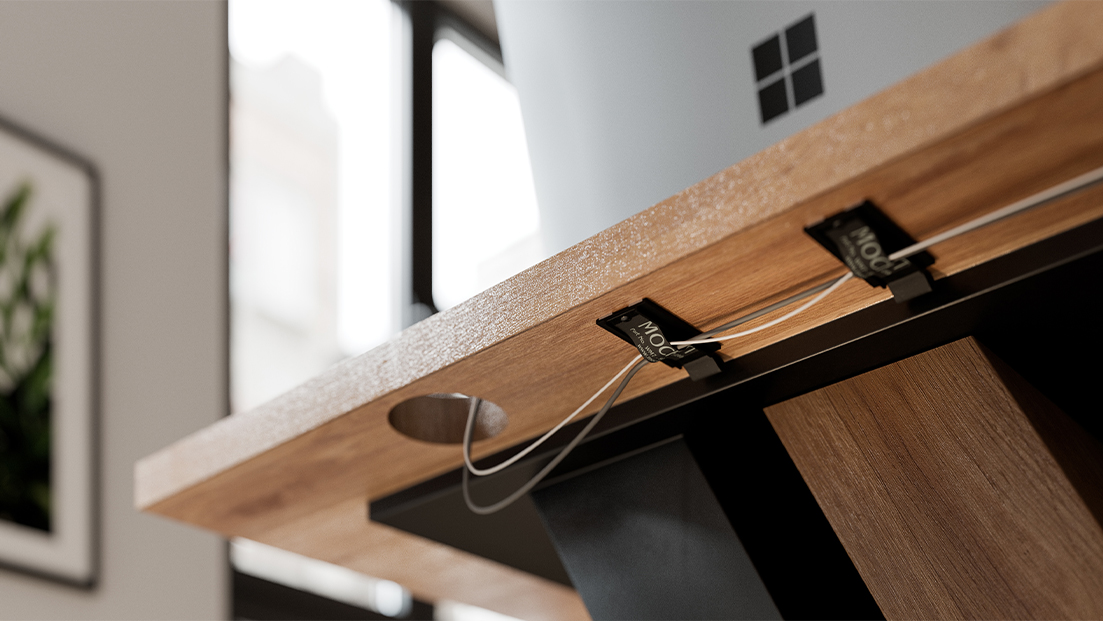
12 Common Cable Management Mistakes an
How To Avoid Them
A well-managed cable system sets the standard for functional performance and the perception of meticulous, high-quality work. Yet, despite best intentions, even experienced professionals encounter challenges that detract from their workspace’s safety and productivity. Learn the most common cable management mistakes and how to avoid them. With this information, your workspace will be reliability, showcase operational excellence, and gain a reputation for quality.
1. Ignoring Labeling
Failing to label cables is a minor oversight that quickly escalates into time-consuming troubleshooting and guesswork. Even simple maintenance requires tracing each wire by hand without proper identification, delaying operations. A clear labeling strategy provides organization and easy identification.
Mark both ends of every cable or use color-coded zip ties. This detail prevents downtime when making changes or upgrades to the system, allowing manufacturers, designers, or facility managers to focus on delivering excellence rather than sorting through a tangled mess.
2. Using the Wrong Tools
The tools selected for cable organization profoundly impact the function and integrity of the entire system. Improvising with generic ties, low-quality adhesives, or mismatched brackets leads to slippage, cable abrasion, or accidental disconnections.
Investing in specialized solutions such as high-grade hook-and-loop straps, durable cable trays, and brush grommets designed for the intended environment supports cable protection and longevity. With the right tools, workers enjoy a setup that upholds safety standards while allowing for effortless adjustments as spaces evolve or expand.
3. Overtightening Cables
Tightly secured cables are likely to endure premature wear and fraying. This oversight can jeopardize the wiring’s connectivity and reliability. While a neat appearance may be desirable, excessive tension sacrifices the function that underpins the workspace.
Adopting flexible restraints such as loosely adjusted straps and leaving sufficient slack creates a functional, long-lasting design. This attention to detail guarantees every device and structural feature remains at peak performance.
4. Neglecting Cable Length
Using cables that are either excessively long or too short disrupts the clean lines and intuitive pathways central to quality interior architecture. Excess length invites clutter and tangling, while cables stretched to their limits accelerate wear and disconnect unexpectedly.
Anticipating needs by measuring precisely and choosing cables of optimal lengths keeps spaces organized and makes room for upgrades. Solutions such as cable spools and cord winders neatly manage unavoidable slack, safeguarding the space’s visual and functional disposition.
5. Overloading Power Strips
A power strip burdened with more plugs than it can handle is a fire hazard. Although it’s tempting to consolidate devices in dense, tech-heavy workspaces, this approach hinders performance and compliance with safety standards.
Employing multiple surge protectors rated for higher capacities and distributing loads intelligently keeps workers safe and prevents electrical fires that may damage valuable equipment. Avoid daisy-chaining, and ensure proper load balancing for a professional look and excellent service.
6. Failing To Plan the Setup in Advance
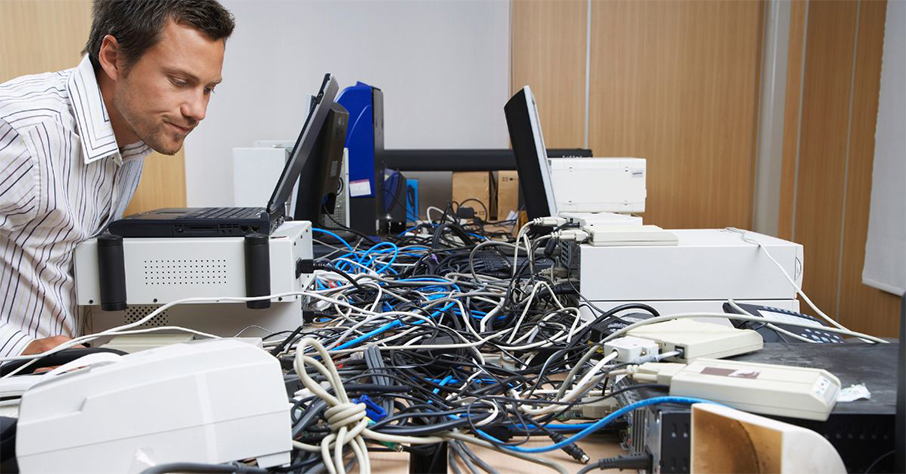
Jumping in without an organized plan leads to a chaotic workspace plagued by crossed cables, unreachable outlets, and a tangled mess that grows worse over time. High-caliber project execution starts with a roadmap for device placement and cable routing.
Sketch initial layouts and account for power source locations that allow for natural cable pathways. Cable managers placed under desks promote seamless installations that are easy to maintain. This step-wise approach sets the foundation for lasting satisfaction and effortless scalability as needs grow.
7. Forgetting About Airflow
Electronic components generate heat, and improper cable placement obstructs airflow around vents, contributing to thermal buildup and reduced device lifespan. This common cable management mistake shortens equipment longevity and may void warranties, adding unnecessary expense and downtime.
Keeping wires away from vents and using mounting brackets or clips to elevate cables preserves the airflow. This level of diligence supports regulatory and warranty compliance while making sure you pay less for cooling.
8. Running Cables Across High-Traffic Areas
Positioning cables across walkways or frequently accessed areas dramatically increases the risk of trips, falls, and cable damage. This layout creates a large concern in environments dedicated to productivity and safety, such as offices, hospitality spaces, and health-care settings.
Professionals should route cables beneath flooring or alongside walls, using robust floor cable covers if path crossings are unavoidable. The result is a safer environment and an unwavering commitment to user comfort that builds trust and strengthens the industry’s reputation.

9. Ignoring Compatibility
Using cables or adapters that do not conform precisely to device specifications leads to frustrating performance issues ranging from unstable connections to irreversible hardware damage. Compatibility extends beyond plugs and ports.
It encompasses voltage ratings, data speeds, and modern technology, differentiating professional-grade solutions from consumer-level improvisations. Reading manufacturer guidance, verifying technical requirements, and proactively sourcing the right components push you forward.
10. Failing To Account for Future Upgrades
A cable management system designed exclusively for current requirements forces complete overhauls when introducing new equipment or features. Forward-thinking professionals build scalability into every installation, allowing teams to accommodate new technologies with minimal disruption.
Leaving extra space in cable channels, reserving expansion slots in trays, and choosing modular management components ensures adaptability and streamlined upgrades. This dedication to continuous improvement delivers enduring value for clients and a competitive edge for your business.
11. Routing Power and Data Cables Together
Bundling power lines and data cables may simplify installation, but it invites electromagnetic interference (EMI), which degrades performance, corrupts data, and necessitates frequent troubleshooting. Separating these lines spatially or, where proximity is necessary, ensuring crossings occur at right angles minimizes risk.
This extra attention provides uninterrupted performance for networking, telecommunications, and other mission-critical systems. Delivering an architecture that prioritizes convenience and technical integrity provides a meticulous, service-first approach.
12. Skipping Routine Maintenance
Even the most thoughtfully designed cable setup deteriorates without ongoing care. Dust accumulation, accidental rearrangements, and cable wear gradually undo the effects of expert management.
Scheduled maintenance tasks, from visual inspections to deep cleaning and timely replacements, protect the longevity and reliability of every connection. Implementing routine checks demonstrates a proactive attitude, offering your clients continued excellence and peace of mind in demanding business environments.
Effective cable management is an important part of any professional space. An environment free from cable clutter elevates aesthetics while supporting the health and longevity of technology investments. Efficient, safe, and scalable connectivity solutions inspire employee satisfaction, impress clients, and streamline maintenance.
By following these strategies and avoiding common missteps, you invest in the well-being of your workspace, the reputation of your service, and the continuous advancement of your clients’ environments. Discover a new standard in cable management by incorporating specialized products and customized services from trusted industry partners. Explore Doug Mockett’s products that will help your projects meet exceptional standards of quality and design. We’re happy to help!