

Black Inventors Who Changed the Builder Industry
Black Inventors Who Changed the Builder Industry

Four African American Inventors Who Reshaped
the Builder Industries With Their Inventions
There was a time when the devices of today were nonexistent. We take them for granted now, but hidden figures were improving and inventing technologies for the people of today. This month, we’re spotlighting four Black inventors who made their mark by creating for the builder industries.
Lewis Latimer
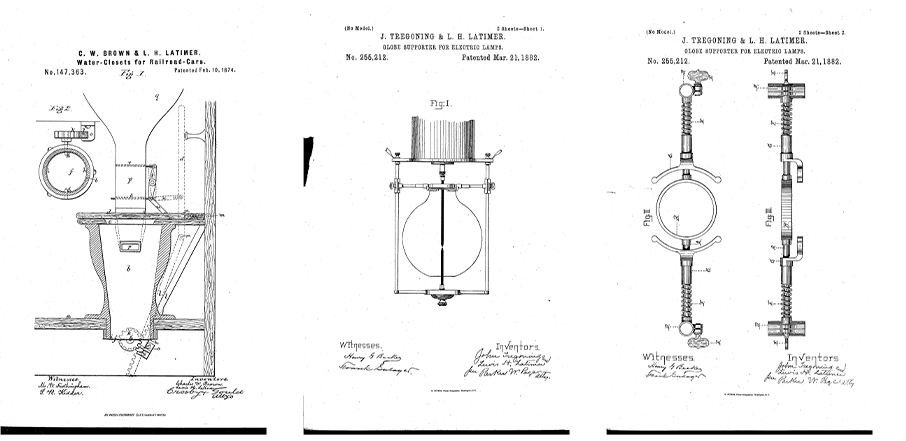
Lewis Latimer was a pioneer in the power industry and worked with the likes of Alexander Graham Bell. He was born in Chelsea, Massachusetts, to freed enslaved parents from Virginia. Of course, the 1800s brought a lot of barriers to African Americans. Despite facing racial discrimination, Lewis remained an ambitious man and pursued an education in ways that were available to him. In 1864, he enlisted in the Union Navy and, with no formal training, taught himself mechanical drawing. He worked as a chief draftsman, patent expert, and, later, an inventor. His first patent was for an improved system for railroad water closets. Besides inventing things independently, he also worked with notable inventors to develop their technologies. He worked with Alexander Graham Bell, drafting for the patent of his telephone, Thomas Edison improving the incandescent light bulb, and Hiram S. Maxim on the production of carbon filament. In 1918, he became the only African-American member of the “Edison Pioneers” credited for creating the nation’s electric power industry.
Marie Van Brittan Brown
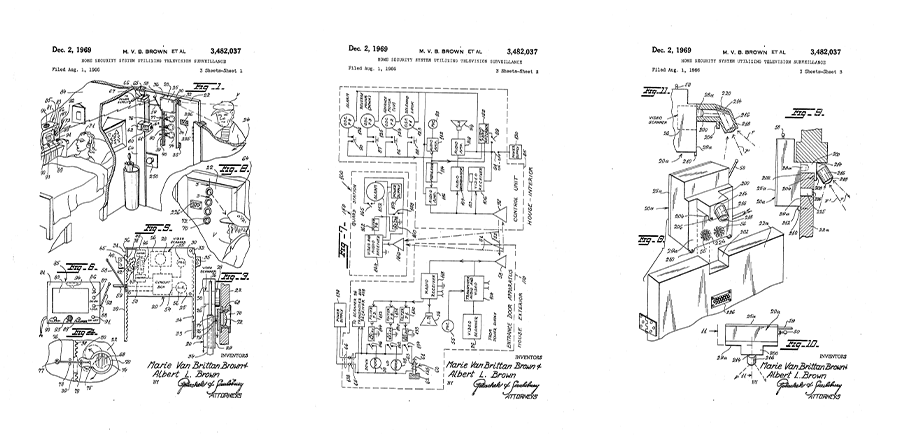
Marie Van Brittan Brown, born in Queens, New York, in 1922, was a trailblazer in home tech accessories. She worked as a nurse when she realized that her home needed more security than was afforded to her. Her neighborhood was rampant with crime, and the police were slow to respond. She and her husband, Albert L. Brown, decided to take matters into their own hands and invented the first audio-visual home security system in 1966. Their system allowed the occupants to see and speak with visitors standing outside their door. It was equipped with lensed peepholes that could be opened or covered, a sliding video scanner that could be moved vertically from one of the three peepholes at different heights, and was connected to a TV monitor that could be placed anywhere in the house. They also included an emergency push button that would alert authorities and anyone else who needed to be notified. Their home security system won an award from the National Scientists Committee, which effectively paved the way for modern home security systems.
Granville T. Woods
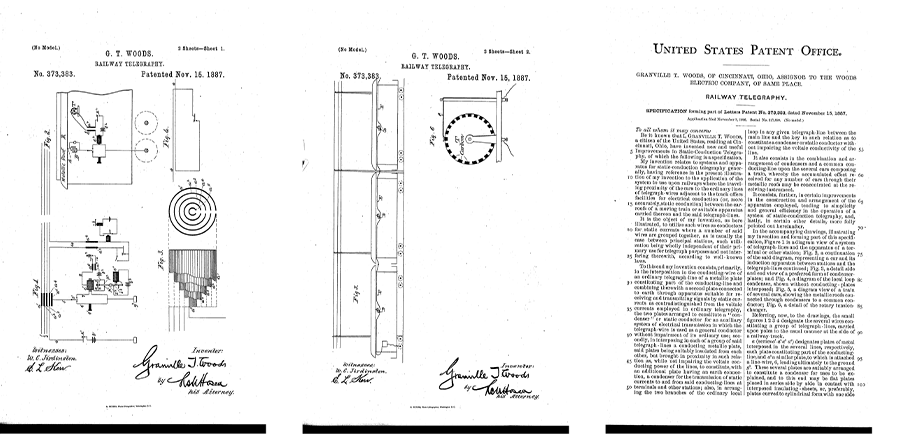
Granville T. Woods, from Columbus, Ohio, started his career at only 10 years old. His family lived in poverty, which meant he had to start working as soon as he could. His lack of education did not deter him from successfully fulfilling his roles in engineering and industrial jobs. His first job was as an apprentice at a machines shop, where he began to learn the intricacies of machining. Woods worked as a fireman on the Southern Railroad and went on to become the first African-American mechanical and electrical engineer after the Civil War. His first patent was for an improved steam boiler furnace, and his second was for a telephone transmitter that allowed men to use Morse code to send messages by telegraph wire to railroad trains and stations. Alexander Graham Bell later bought this patent. His most notable invention was a device that enabled street cars to get power from the overhead wires. His patents were so renowned that Thomas Edison tried to claim ownership over one of them. Edison lost the legal battle and later extended Woods a job at the Edison Company, which Woods declined.
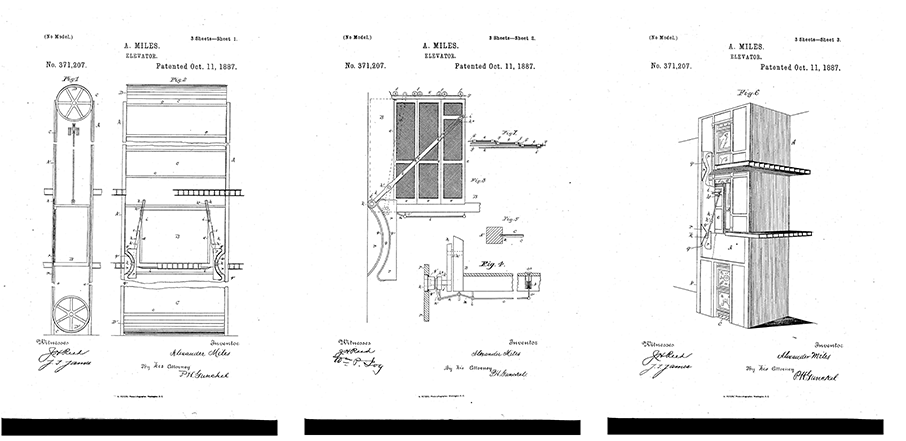
Alexander Miles
Alexander Miles was an inventor born May 18, 1838, in Pickaway County, Ohio. Miles made his living as a barber, becoming the first black member of the Duluth Chamber of Commerce. Miles was quite the entrepreneur as he sold and marketed his own line of hair products and ran a barbershop out of St. Louis Hotel. His first patent was a way to make elevators safer. Elevator doors used to be closed manually, but Miles designed a system that made the elevator doors and the shaft doors work together to open and close automatically when arriving and departing from a specified floor. A standard feature today was a hazard in his times. Miles became a successful businessman, later founding The United Brotherhood life insurance company, and would ensure black people who were historically denied insurance coverage.
These accomplished Black Inventors paved the way for the life we live today. We have them to thank for improving lights, home security, railroads, and elevators.